


Whoa! Ever held a credit-card–thin piece of metal and plastic and thought, “That could be my life savings”? Really. Here’s the thing. For a lot of people, the idea of cold storage still brings up images of paper seeds tucked in a shoebox, or a metal plate buried in the yard. Those methods work—sometimes—but smart-card hardware wallets are quietly changing the equation. They feel modern, tactile, and honestly less terrifying to set up than the horror stories about lost mnemonic phrases. My instinct said “this is niche”, but then I tried one, and things looked different.
Cold storage isn’t magic. It’s a strategy: keep the private keys offline so attackers can’t reach them. Simple. But the devil lives in the details—how you generate keys, how you back them up, how you recover if something goes wrong. This article walks through why smart-card style hardware wallets and backup cards matter, where they shine, and where they’re still imperfect. I’ll be honest: I’m biased toward practical solutions that regular humans can actually follow, not just security researchers with a lab bench.
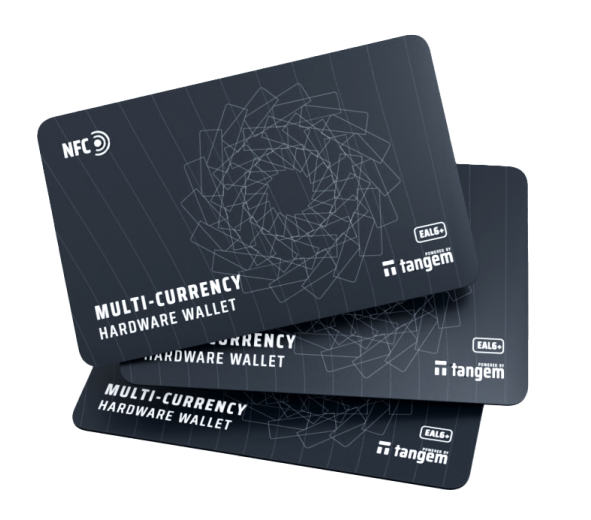
First, a quick scene. Picture your usual hardware wallet—bulky, clunky, sometimes fragile. Now picture a sleek card, about the size of a credit card, that stores a key securely and can be tapped or connected when needed. Neat, right? (Oh, and by the way… some of these devices even let you do contactless signing.)
Cold storage basics: what’s the point?
Short version: keep the key offline. That prevents remote attackers from exfiltrating your private keys. But there are trade-offs. If you make recovery too hard, you can lose access permanently. If you simplify recovery too much, you open up attack surfaces. On one hand, seed phrases let you reconstruct wallets anywhere. On the other hand, physical cards simplify everyday use for people who don’t want to memorize or guard 24 words. Initially I thought seed phrases were always better; then I realized that for many users the human factor—misplacing, copying poorly, or falling for social engineering—makes the theoretical best option the practical worst.
Smart-card wallets are a middle ground. They make the device portable and manageable, while keeping keys offline until signing time. They’re not a silver bullet, though. There are scenarios where a paper or metal seed backup is preferable, especially for estate planning or multi-person custody setups.
Backup cards: how they work and why they help
Backup cards are basically duplicates of the secure element inside your primary card. When done right, they let you create one or more physically separate pieces that can each recreate your wallet. The idea is simple: if your main card is lost or destroyed, you still have a surviving backup that can restore access. This reduces single points of failure. Nice, right?
But it’s not just duplication. Good systems use Shamir’s Secret Sharing or multi-factor backups so that no single backup reveals the whole key. That’s important. If someone finds your backup card in a wallet and it’s full-access, you’re toast. So think about splitting, distributing, and burying—though maybe not literally burying.
Hmm… here’s a practical bit: some smart-card solutions let you sign transactions without ever exposing the private key, and they pair well with backup cards. That lowers the risk when you need to transact. Also, a lot of these cards are tamper-evident: if someone tries to modify them, you’ll notice. I’m not 100% into any brand worship, but when it comes to robustness, physical design matters.
Pros and cons — the real trade-offs
Pros first. Smart-card hardware wallets:
- Are compact and durable—carry one in a wallet or safe.
- Offer offline key storage with easy, fast signing.
- Can be duplicated or split for resilient backups.
- Often have a lower learning curve for non-technical users.
Cons:
- You must manage physical security: theft, fire, flood, accidental loss.
- Not all cards or ecosystems support multisig or complex recovery workflows.
- Some models are closed-source or have opaque security claims—buyer beware.
- There’s a cost trade-off: a secure card + backups + secure storage = more upfront work and expense.
On one hand these devices are elegant; on the other, they demand physical threat modeling. For instance, is your main concern remote hacking, or an ex-spouse who can rummage through your stuff? The answer changes the recommended backup strategy. Actually, wait—let me rephrase that… the best backup depends on both the threats you expect and the people you trust (or don’t trust).
Practical setup advice that people actually follow
Okay, so check this out—I’ve set up hardware for a mix of techy friends and relatives. The folks who succeed are those who keep setup simple and document recovery steps clearly (but not in plain text that anyone can find). Here’s a practical path that balances security and usability:
- Buy two backup cards in addition to your primary card, ideally from the same trusted vendor. Keep each in different secure locations.
- Use a passphrase or PIN if supported—this adds a layer that prevents single-card theft from instantly draining funds.
- Consider splitting a backup using Shamir’s Secret Sharing if you want redundancy without giving any one person full access.
- Store one backup in a safe deposit box, another with a trusted attorney or family member, or in a home safe—diversity is the point.
- Test your recovery process before transferring significant funds—use a small amount first.
These are not novel ideas. But they matter because people skip testing. If the recovery fails, you’ve created a time bomb. Also: label things in a way only you understand. Use codewords, or shorthand that makes sense to you—somethin’ cryptic. The goal: be recoverable but not obvious.
Common failure modes and how to mitigate them
People lose access in a few repeated ways. They lose the card. They forget the passphrase. The vendor disappears. They fail to split backups properly and a single disaster wipes everything. Each failure mode has a fix:
- Lose the card: have at least one geographically separate backup.
- Forget passphrase: store hints securely with a trusted person or use mnemonic hints kept offline.
- Vendor disappears: prefer standards-based solutions and exportable recovery formats.
- Single-disaster wipeout: diversify storage locations and mediums (card + metal seed plate, for instance).
For many people, combining a smart-card primary with a metal-engraved seed or encrypted USB in a firebox covers both convenience and disaster resiliency. It’s not pretty, but it works.
When to choose a smart-card wallet (and when not to)
Choose a smart-card wallet if you value portability, ease-of-use, and a lower tech barrier for daily signing. They’re great for hobbyists, small-business owners, and anyone who dislikes fiddling with tiny screens and button sequences. They’re also attractive when you want a modern-looking solution to hand family members without terrifying them with a paper seed.
Don’t choose them if your priority is institutional-grade multisig with large teams, or if you require air-gapped workflows that are fully auditable by third parties. Also avoid models with opaque firmware updates or uncertain supply chain provenance. This part bugs me: security claims are sometimes marketing dressed up as specs. Ask questions.
Where to learn more and a personal recommendation
If you’re curious about smart-card hardware wallets, start by researching reputable models and auditing third-party reviews. One product line I came across that handles the smart-card form factor thoughtfully is tangem—I’ve used it and found the balance between usability and security compelling for many use-cases. Check them out and read the documentation closely to understand their backup and recovery options before committing.
FAQ
Are backup cards safer than seed phrases?
They’re different risks. Backup cards reduce human error in writing seeds but introduce physical theft or destruction risks. The safer choice depends on how you store and split backups.
Can a smart-card be cloned?
Good smart-cards use secure elements designed to prevent cloning. However, no system is invulnerable—supply chain attacks or flawed implementations can undermine security. Buy from reputable vendors.
Should I keep a paper backup too?
Paper backups are cheap and long-lasting if protected from moisture and fire. Many people combine metal and card backups: redundancy across media increases survivability.
What about multisig with cards?
Some ecosystems support multisig with hardware cards, but integration varies. If multisig is critical, check compatibility and recovery workflows before choosing a product.
Leave a Reply